National Mall tour: the best stops for a Washington day trip
Plan a National Mall tour for one day in Washington: the Capitol, one Smithsonian museum, the Washington Monument, the White House, the war memorials and the Lincoln Memorial, in the right order.
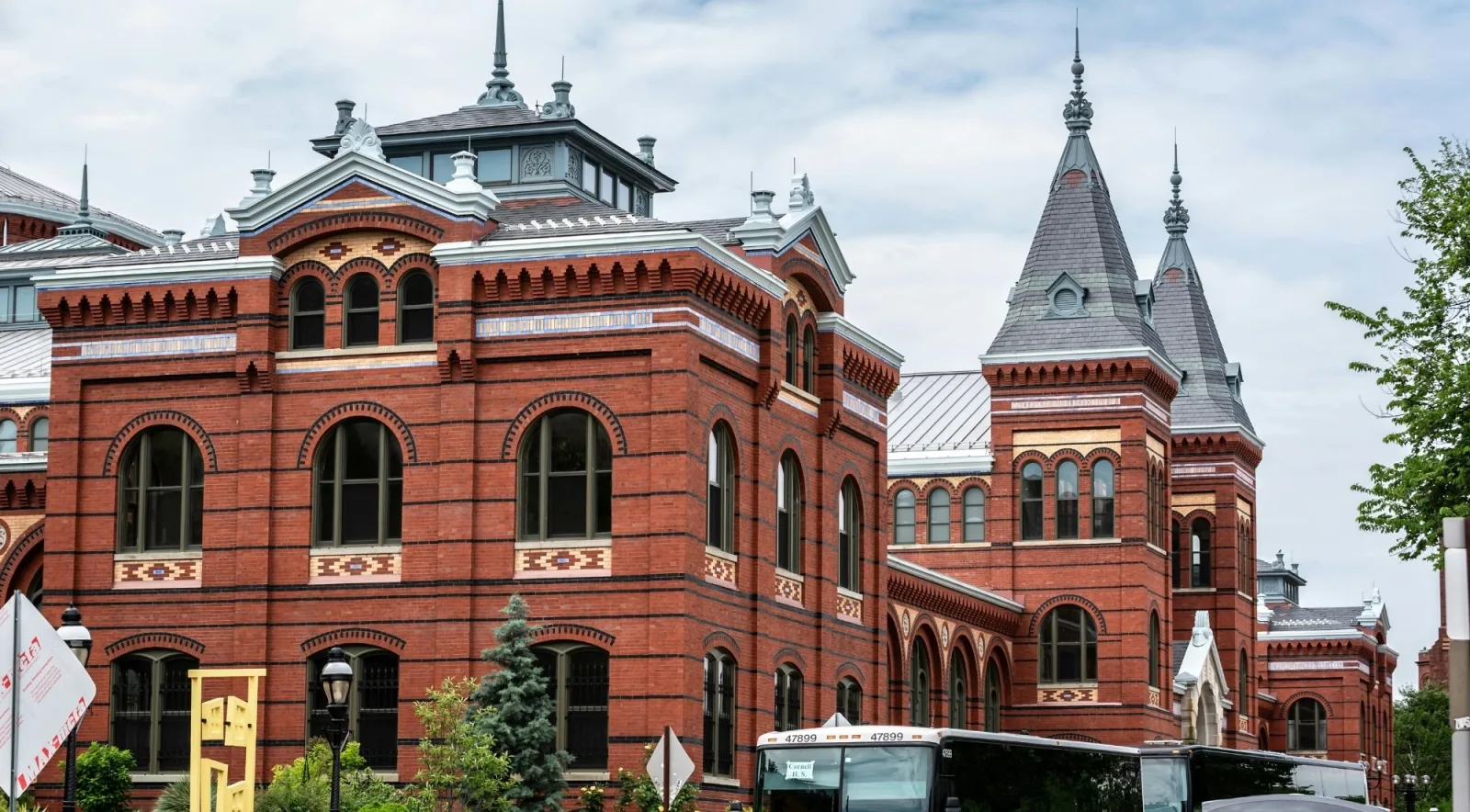
The National Mall is the part of Washington most first-time visitors picture before they arrive: the Capitol at one end, the Lincoln Memorial at the other, the Washington Monument in between, and great museums and memorials along the way. It is also much bigger than it looks, about two miles from the Lincoln Memorial to the Capitol, so the best tour follows the map in one direction. Arriving from New York by train, walk it east to west: the Capitol, one Smithsonian museum, the Washington Monument, the World War II Memorial, a detour to the White House, then the Vietnam, Korean War and Lincoln memorials.
Check Availability
The short version
If you have one day, put these first:
- The US Capitol, from outside
- One Smithsonian museum
- The Washington Monument
- The World War II Memorial
- The White House, from outside
- The Vietnam Veterans Memorial
- The Korean War Veterans Memorial
- The Lincoln Memorial
With more time, add the Martin Luther King Jr. Memorial, the Jefferson Memorial, the Library of Congress or a tour inside the Capitol. On a guided coach from New York, add Arlington National Cemetery, which the coach can reach across the river and which moves you between the two ends of the Mall far more efficiently.
At a glance: start at the Capitol if you arrive by train, finish at the Lincoln Memorial, give one museum 60 to 90 minutes, and walk the World War II, Vietnam, Lincoln and Korean War memorials as one compact cluster. The White House is a worthwhile detour on a first visit, most of the outdoor sites are open 24 hours, and the biggest mistake is walking the Mall in both directions.
Why the Mall suits a first visit
Washington’s monumental core is unusually easy to read. The main landmarks line up on one long east-west axis, the Capitol, the Washington Monument and the Lincoln Memorial, with the museums along the central stretch, the White House to the north and the Tidal Basin memorials to the south and southwest. That gives you a natural order of sights without zigzagging through neighbourhoods.
The problem is scale. The Mall is open to the sky, so the landmarks look closer than they are; plan for a lot of walking. If you would rather see it with a guide and without the long walks, the monuments and memorials bike tour ($65, 4.7 from 433 reviews) covers about four flat miles of the Mall in three hours, from 701 D Street NW.
The best direction: east to west
Arriving at Union Station from New York, east to west is the obvious choice. The Capitol is close to the station, the Smithsonian museums sit on the way, the Washington Monument becomes your midpoint, the Lincoln Memorial makes a beautiful final stop, and you do not walk all the way back east unless you want to. At the end, take a taxi, rideshare or public transport back toward Union Station; there is no need to walk the Mall twice.
Stop 1: the US Capitol
Start here if you came by train. The Capitol Visitor Center is open Monday to Saturday from 8:30 AM to 4:30 PM, and admission is free. Official tours are free too, but need a timed pass, booking ahead is advised, and the last tour starts at 3:20 PM. The tour covers the Crypt, the Rotunda and National Statuary Hall.
From outside, allow 30 to 45 minutes for the East Front, the grounds, the view west down the Mall and photographs. With a tour inside, allow 90 minutes to two hours including security and check-in. Go inside if American political history and architecture matter to you; skip it if you want to cover as much of the Mall as you can. On a one-day trip from New York, make a Capitol tour your one timed visit, not one of several. Our guide to Capitol tours on a day trip covers booking and security.
Optional: the Library of Congress
Just east of the Capitol and a natural pair with Capitol Hill; its Thomas Jefferson Building is one of the finest interiors in Washington. Add it if architecture interests you, you are skipping a Smithsonian museum or you have a long day. Skip it if you have already booked a Capitol tour, museum time matters more, or you want a relaxed afternoon at the western end.
Stop 2: one Smithsonian museum
This is the place for an indoor break, and the rule is one museum, not “doing the Smithsonian”.
- The National Air and Space Museum: best for first-time visitors, families, aviation and spaceflight. It needs a free timed-entry pass.
- The National Museum of Natural History: best for families, fossils, gems, animals and an unplanned visit.
- The National Museum of American History: best for US history, culture, politics and social history.
Stay 60 to 90 minutes, enough to enjoy one section without losing the afternoon. The museums are huge: a visitor who tries three in one day spends it entering, getting oriented, rushing and leaving, while one museum lets you remember something. If museums are your main reason for coming, the answer is not a more aggressive itinerary but another day.
Stop 3: the Washington Monument
It anchors the middle of the Mall, and you will see it from almost everywhere. From outside it needs no ticket, and for most one-day visitors that is enough. Going up needs a ticket; the monument is generally open 9 AM to 5 PM and closes on 4 July, 25 December and one day a month for maintenance. Go up if the view is a priority, not if you already have a Capitol or Air and Space booking: the Mall works best when you keep some flexibility.
Stop 4: the World War II Memorial
The natural next stop as you carry on west, between the Washington Monument and the Lincoln Memorial. Allow 15 to 20 minutes; it needs no reservation. This is where the Mall stops feeling like a museum district and starts feeling like the landscape of memorials people picture when they think of Washington.
The White House detour: yes or no?
The White House sits north of the main axis, not on the route, but include it on a first visit. Allow 30 to 45 minutes for the detour. You see the outside; ordinary sightseeing does not mean a tour inside. Skip it if you have seen it before, your train home is early, you would rather have the Lincoln Memorial at dusk, or your museum visit ran long.
Stop 5: the Vietnam Veterans Memorial
As you approach the Lincoln Memorial, the sights cluster tightly again. This is a place to slow down: allow 15 to 20 minutes. It is free and open 24 hours. The black granite wall is the heart of it, but the memorial also includes the Three Servicemen statue and the Vietnam Women’s Memorial.
Stop 6: the Lincoln Memorial
The stop to protect if the day starts slipping. Inside are the seated Lincoln, the Gettysburg Address and the Second Inaugural Address; outside is one of Washington’s defining views, east over the Reflecting Pool to the Washington Monument and the Capitol beyond. Allow at least 30 minutes, more if you are finishing here near dusk. It works particularly well late in the day, because the memorial is open 24 hours, long after the museums have closed.
Stop 7: the Korean War Veterans Memorial
Just southeast of the Lincoln Memorial. Its 19 stainless steel figures, reflecting surfaces and Wall of Remembrance create a very different mood from Lincoln’s classical grandeur. Allow 10 to 20 minutes; late afternoon, dusk and even rain suit it especially well.
Short of time? The western cluster is the one to keep: the World War II, Vietnam, Lincoln and Korean War memorials give you four major memorials with very little wasted movement. Our Washington monuments guide covers each of them in more depth.
The Martin Luther King Jr. and Jefferson memorials
The Martin Luther King Jr. Memorial is a strong addition if you still have time after the Lincoln and Korean War memorials, especially if civil rights history is a priority. It sits toward the Tidal Basin, is open 24 hours, and deserves 20 to 30 minutes.
The Jefferson Memorial is beautiful but needs the biggest detour on the classic route, and it is the first major stop to cut from a tight first day. Add it if you have eight to ten hours or more, it is cherry blossom season, you are using a coach or rideshare, or you are not racing for a train. Skip it if you are tired, sunset is coming and you want the Lincoln Memorial, or you have to get back to Union Station soon.
The Mall in four, six, eight or ten hours
- Four hours: the Capitol from outside, the Washington Monument from outside, and the World War II, Vietnam, Lincoln and Korean War memorials. Skip the museum, the White House, the Jefferson and King memorials and the inside of the Capitol. A fast but coherent highlights route.
- Six hours: add a short Smithsonian stop and the White House from outside. Still skip the Jefferson Memorial unless you move very fast.
- Eight hours: the sweet spot. The Capitol, one museum, the Washington Monument, the World War II Memorial, the White House, and the Vietnam, Lincoln and Korean War memorials, without sprinting.
- Ten hours or more: add one substantial extra: the inside of the Capitol, the top of the Washington Monument, the Library of Congress, the Martin Luther King Jr. Memorial or the Jefferson Memorial. Not all five.
Arriving by Amtrak, or on a coach from New York
By train: Union Station to the Capitol in the morning, a Smithsonian museum in the late morning, the Washington Monument and the World War II Memorial in the early afternoon, the White House in the mid-afternoon, the Vietnam, Lincoln and Korean War memorials in the late afternoon, and a rideshare or public transport back to Union Station in the evening. The sequence makes the most of your arrival point. Washington by train has the train times.
On a coach from New York: the tours sensibly reverse much of it: Arlington, the Lincoln, Vietnam and Korean War memorials, the White House, the Washington Monument, the Capitol, then Union Station or a museum, with the order shifting for traffic and security. The point of the coach is not to copy the ideal walking route but to link the scattered clusters efficiently. The Washington Highlights tour ($108, 4.6 from 542 reviews) ends with 90 minutes of free time on the Mall, and the day trips comparison sets out the rest.
How much walking, and how to walk less
A lot. The National Park Service warns that visitors are often surprised by how far they walk, and the Capitol to the Lincoln Memorial is about two miles before you add museum galleries, the White House detour, the walk from the station, the King and Jefferson memorials and stops for food and restrooms. A full day on the Mall easily runs to several miles.
Use rides selectively, not constantly. Walk the Smithsonian cluster, the Washington Monument to the World War II Memorial, and the World War II, Vietnam, Lincoln and Korean War memorials. Ride from the Lincoln Memorial to Union Station, from the Capitol to the White House if you are tired, from the Jefferson Memorial to Union Station, and from Arlington to the Mall. That beats buying a hop-on hop-off ticket only to avoid walking.
Is a hop-on hop-off bus worth it? Sometimes. It suits limited mobility, a love of narration, a full day, or repeated trips between the two ends of the Mall; it suits a very tight day, happy walkers and same-day trips from New York less, because waiting for the next loop eats into a short visit. The Old Town Trolley hop-on hop-off tour ($55, 4.2 from 714 reviews) starts at Union Station.
The Metro is useful mainly for bigger transfers. The National Park Service recommends public transport because parking is limited, and Smithsonian station serves the central Mall, but not every memorial has a station nearby. Think of the Metro as a way to reach or leave the Mall, not a substitute for walking between monuments. Driving is usually a mistake: parking is limited, and a car adds searching, traffic and the walk from the garage anyway.
When to start, and why late afternoon is so good
Start early if you want anything indoor or timed, because the Capitol Visitor Center and the museums keep daytime hours while most outdoor sites on the Mall do not. That gives you a smart sequence: indoor and timed visits first, outdoor and flexible ones later.
By late afternoon the museum crowds begin to thin, the light improves, the outdoor memorials are still open, the summer heat drops and you are no longer racing against closing times, which is why finishing at the Lincoln Memorial beats starting there.
Is a night tour of the Mall worth it? Yes, if you are staying in Washington. Most outdoor sites on the Mall are open 24 hours, rangers are generally on duty until 10 PM, and the Lincoln, Korean War, Vietnam and King memorials are particularly atmospheric after dark; the National Mall night bus tour ($64, 4.6 from 315 reviews) and the Monuments by Moonlight trolley tour ($60, 4.6 from more than 1,600 reviews) both cover them. For a same-day visitor from New York, a night tour only works with a very late train home.
Accessibility, weather and food
Accessibility: the National Park Service says accessibility is a priority across National Mall and Memorial Parks, although some historic facilities have limits. If you have mobility needs, use transport between the large clusters, check the elevator status at the Lincoln Memorial, check each attraction’s access, do not assume a coach is wheelchair accessible, and build in more time.
Summer: the Mall has long exposed stretches, and the National Park Service warns about heat-related illness. Bring water, sunscreen, a hat and light clothing, and use a Smithsonian museum as a midday cooling break.
Winter: short days change the pace. Do the Capitol and a museum earlier, the western memorials later, and the Lincoln Memorial around dusk if you can; the outdoor memorials give you flexibility after the indoor sites close.
Rain: do not cancel a day on the Mall for light rain; some memorials become more atmospheric. Go into a museum during the heavier showers, and bring a waterproof layer, shoes with grip and flexible timing.
Where to eat: do not count on finding the perfect restaurant beside the Reflecting Pool. On a one-day visit, use a museum café, a quick casual place near the Mall, Penn Quarter, or Union Station before or after sightseeing, and keep lunch to 30 to 45 minutes unless food is a priority.
What to bring: comfortable walking shoes, water, a phone charger, photo ID, a small day bag, a layer for the weather, sunscreen in warm weather, any timed-entry confirmations and a small snack. Travel light: security is easier, and you carry everything for hours.
Common National Mall mistakes
- Walking east, west and east again. Pick a direction.
- Visiting several museums. One is enough on a highlights day.
- Booking several timed visits. Your flexibility disappears.
- Underestimating the distance. The Mall is not compact.
- Leaving the Capitol until late afternoon. Its visitor hours are limited.
- Ending with a long walk back to Union Station. Take a ride.
- Treating the Lincoln Memorial as a five-minute photo stop. Give it time.
The best stop for each kind of traveller
- First-time visitor: the Lincoln Memorial.
- Family: Air and Space or Natural History.
- Politics and history: the Capitol.
- Photography: the Lincoln Memorial and the Reflecting Pool.
- Architecture: the Capitol and the Jefferson Memorial.
- Civil rights history: the Lincoln and Martin Luther King Jr. memorials.
- Short of time: the western cluster of memorials.
Frequently asked questions
How long does it take to walk the National Mall?
It depends on what you include, but it is about two miles from the Capitol to the Lincoln Memorial before museums and detours. A full day on the Mall easily runs to several miles.
Can you see the National Mall in one day?
Yes. One day is enough for the main sights if you choose one museum and follow a logical route.
What are the must-see stops?
For most first-time visitors: the Capitol, one Smithsonian museum, the Washington Monument, the World War II Memorial, the White House, and the Vietnam, Lincoln and Korean War memorials.
Which direction should I walk?
East to west if you arrive at Union Station: start at the Capitol and finish at the Lincoln Memorial, then take a ride back.
What should I skip if I am short of time?
The Jefferson Memorial, extra museums and the Library of Congress are the easiest first cuts.
Is the National Mall open at night?
Most outdoor sites are open 24 hours. The inside of the Washington Monument keeps separate daytime hours.
Are the National Mall attractions free?
Most outdoor monuments and the Smithsonian museums are free. Some, such as the Air and Space Museum, need a free timed pass.
Do I need a ticket for the Capitol?
You need a free timed pass for the official Capitol tour; the Capitol Visitor Center itself is free to enter.
Is the Washington Monument free?
Yes, but going up needs a ticket, and advance tickets carry a small booking fee.
Can I include Arlington?
Yes, but it is outside the National Mall, across the river, and works better on a guided coach tour or as a major stop in its own right.
Is the Mall suitable for children?
Yes. Keep the route shorter and add one museum for variety.
Is the Mall wheelchair accessible?
Many sites have accessible routes, but conditions vary at the historic sites. Check the individual attractions and use transport between the clusters.
Coming from New York for the day? Compare the guided tours that cover the Mall on the Washington DC day trips page.
Washington and Back in One Day
Leave Midtown in the morning, walk the memorials with a guide, and sleep in your New York hotel tonight. Free cancellation up to 24 hours before.
Check Availability & Book