Can you do Washington in a day by train?
Yes. The train is the fastest way to reach Washington from New York by land, and on a weekday it can give you about nine hours in the city. The trade-off is that you plan the whole day yourself: the tickets, the route between the sights and the time you need to be back at the station.
Amtrak trains leave from Penn Station, boarding through Moynihan Train Hall on 8th Avenue, and arrive at Washington Union Station, a short walk from the U.S. Capitol.
Why the train works for Washington
Washington is far enough from New York that the journey matters, and it sits on one of the strongest rail corridors in the United States. You are not going Manhattan, airport, flight, airport, city centre, or Manhattan, highway, outlying bus stop, city transport. You go from Midtown Manhattan to Union Station and start sightseeing next to the Capitol. Three things follow from that:
- You avoid highway traffic. Buses and tour coaches can lose time on I-95. The train is not immune to delays, but it is not sitting in Baltimore and Washington traffic.
- You arrive in the right part of Washington. Union Station is beside Capitol Hill, so you can walk toward the Capitol almost at once.
- You control the day. You decide which museum, how long at the Lincoln Memorial, whether to skip Arlington, whether to book the Capitol, when to eat and when to go home. That flexibility is the train’s biggest advantage.
The stations
In New York, Amtrak boards at Moynihan Train Hall, 351 West 31st Street, its main New York concourse, across Eighth Avenue from the older Penn Station and part of the same complex. It is easiest from Midtown West, Times Square, Chelsea, Herald Square and Hudson Yards. If you are staying in Brooklyn, Queens or Lower Manhattan, count the early trip to Penn Station in your day.
The hall opens at 5 AM daily, which matters because the most useful trains are early. You will find ticketing, restrooms, seating, Wi-Fi, boarding information and food, but do not count on every café being open at dawn; bring breakfast or buy it the night before. Amtrak advises arriving at least 30 minutes before departure, or 45 minutes if you need checked baggage or assistance, and boarding gates are usually posted about 15 minutes before departure. Arriving 15 minutes too early costs little; missing your 6 AM train costs the whole day.
In Washington, trains arrive at Washington Union Station, 50 Massachusetts Avenue NE, one of the best arrival points you could ask for on a sightseeing day. Amtrak itself lists the National Mall and the Capitol among the nearby sights, and you are already at the eastern end of the monuments.
Northeast Regional or Acela?
The Northeast Regional is the sensible choice for most day-trippers. Most direct Regionals take about 3 hours 15 minutes to 3 hours 45 minutes, depending on the train and its stops (the timetable below includes runs of 3 hours 21, 3 hours 29 and 3 hours 41), so check your exact train. It runs all day, and has coach seats with the lowest fares. Acela is quicker, at about 2 hours 45 minutes to 3 hours, but sells only Business and First Class seats, and late-booked Acela tickets can reach $200 or more each way.
Fares change daily, so there is no single price to quote (our Amtrak same-day guide: Regional vs Acela has the trains that suit a day trip). Book a Regional several weeks ahead and you can travel from around $30 each way. Close to the date, expect much more. Check the fare type too. Value fares cannot be changed, while Flex fares cost more but can be changed or refunded without a fee, which is useful if you might stay later than planned.
Acela is often faster, and the new NextGen Acela trains are now running on some departures, but being the premium train does not make it the better day-trip choice. Ask how much extra time in Washington a particular Acela buys you. If it leaves at a better hour, arrives an hour earlier or lets you stay later, turning a rushed day into a comfortable one, it can be worth paying for. If it saves 15 to 25 minutes, the Regional is usually better value. A simple test: divide the extra fare by the extra minutes in Washington. Paying $60 to save 45 minutes is a fair question to ask yourself.
| Northeast Regional | Acela |
|---|
| Best for | Most day-trippers | Travellers short of time or wanting more comfort |
| Journey | About 3 h 15 to 3 h 45 | About 2 h 45 to 3 h |
| Fare | Usually lower | Usually higher |
| Comfort | Good | More premium |
| Our advice | The default | Upgrade only when the schedule helps |
First Class is rarely worth it for a sightseeing day: you are trying to make the most of Washington, not of the train. Spend the money on a better departure, a later return, a taxi in DC, dinner or a night’s stay. And you do not have to book the same train type both ways: a Regional down and an Acela back, or the reverse, can give you the best schedule in each direction.
How to pick your trains
Shop in this order: the arrival time in Washington first, the departure time from Washington second, the fare third, and only then Regional or Acela. Most people start with the brand; for a day trip, the schedule matters more. Say Train A is cheaper and arrives at 10:50 AM, and Train B costs $40 more and arrives at 9:35 AM. Train B buys you 75 extra minutes in Washington, which can be the difference between seeing the Capitol from outside and taking a tour inside. The extra fare may be excellent value.
Book as early as you can. The route is busy with business, government and leisure travellers, commuters and weekenders, and a day-tripper wants exactly the trains everyone else wants: the early ones south and the evening ones north. Compare the outbound and return together, several early departures and several evening returns, both Regional and Acela, and the fare conditions, and do not plan around a generic “tickets from $X” claim.
If you dislike early mornings, Washington is a weaker day trip. There is no way round the distance: a 10 AM train is comfortable but gets you in well into the day, and the museums and federal sites close in the late afternoon, so you cannot make it up by staying late. For a relaxed start, stay overnight.
Which trains to take
For a day trip, the early weekday Regionals work best. On the current timetable, the 4:50 AM from New York reaches Washington at 8:31 AM, the 5:45 AM arrives at 9:06 AM, and the 6:32 AM arrives at 10:01 AM. Saturday has a 5:35 AM Regional arriving at 9:07 AM.
For the ride home on weekdays, the 6:08 PM Regional gets to New York at 9:26 PM, the 7:12 PM at 10:38 PM, and the 9:15 PM at about 12:45 AM. Weekend timetables are thinner, so check your date before you book. Leave at least 20 to 30 minutes to get back through Union Station; the last hour of a day trip always takes longer than you expect.
From Union Station to the National Mall
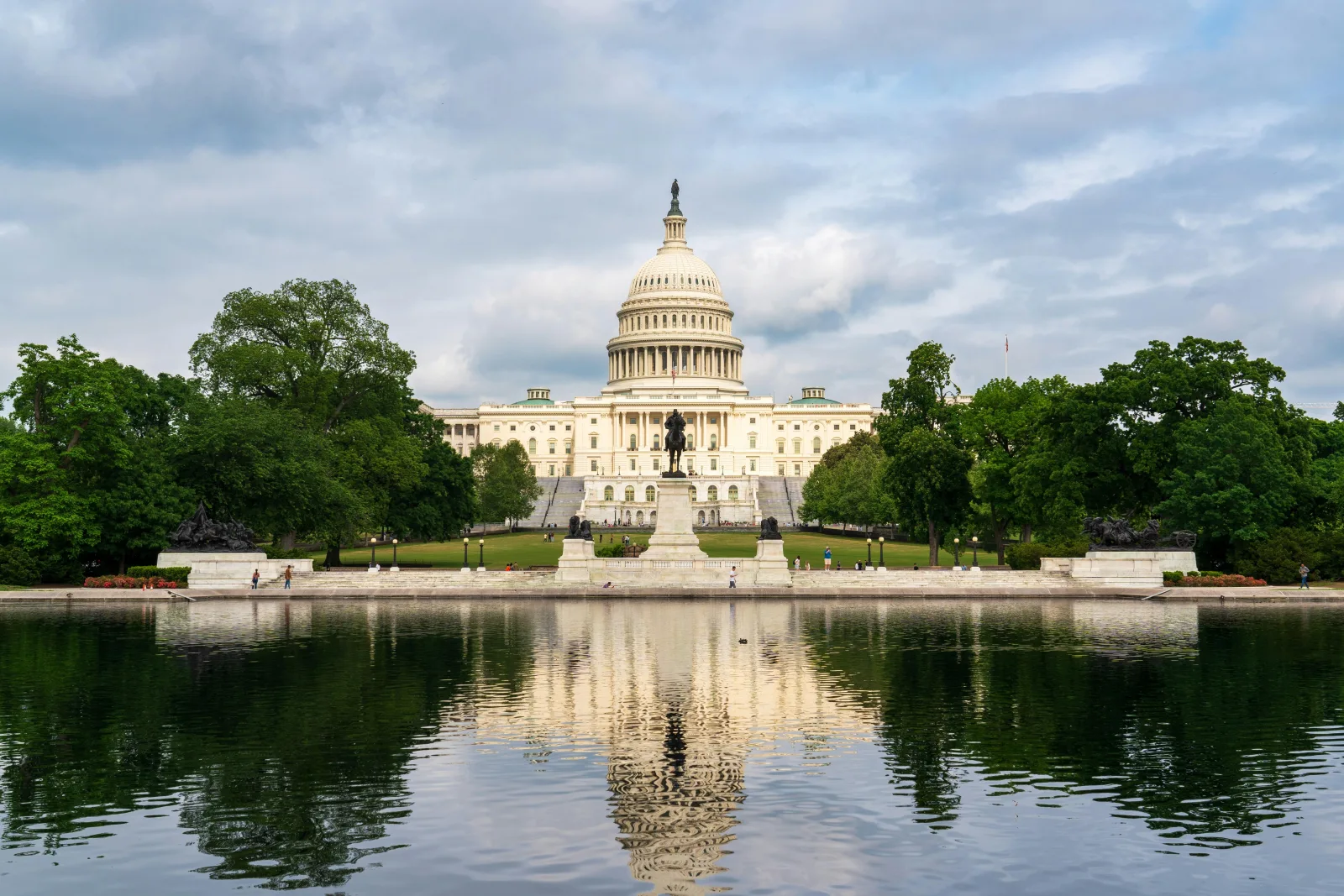
The Capitol end of the Mall is walkable from the station. It is about 0.8 miles to the Capitol, or 10 to 15 minutes on foot from the station’s front doors.
The Lincoln Memorial is at the other end, about two miles further west. You can walk the whole Mall, and many people do, but it takes a good 45 minutes before you stop anywhere. The Metro saves your legs: take the Red Line from Union Station to Metro Center and change to the Blue, Orange or Silver Line for Smithsonian, which has an exit on the Mall. That takes about 13 minutes. For the Lincoln Memorial itself, Foggy Bottom is the nearest station, but it is still a 15- to 20-minute walk. You can tap a contactless bank card or phone at the faregates, so there is no need to buy a SmarTrip card. A taxi or rideshare is easiest for the long west end if your group is tired.
From the station, walk to Capitol Hill first. The Capitol is close enough that walking makes sense for most visitors, so save public transport for the longer crossings later. That gives you an efficient east-to-west route: the Capitol, a Smithsonian museum, the Washington Monument, the White House, the western memorials and the Lincoln Memorial, then a taxi, rideshare or public transport back toward Union Station.
How much time you need in Washington
- About 6 hours is the minimum useful window: enough for the main highlights.
- 7 to 9 hours is where a train day becomes a very good one.
- 9 to 10 hours or more lets you add a timed visit inside without rushing.
Booking timed visits
The Capitol: yes, if it is a priority. The train makes a visit inside much easier than a coach from New York, and the Capitol is next to Union Station. Book a morning slot after your expected arrival, but leave a real buffer: “train arrives 9:42, Capitol tour at 10:00” is too tight once you allow for leaving the station, the walk, security and a possible delay.
The Air and Space Museum: yes, if it matters to you. It needs a free timed-entry pass for every visitor, and the train suits it because you control the schedule. Just do not stack timed entries too tightly.
The Washington Monument: only if it is one of your top priorities, because it is another fixed time. One timed attraction is comfortable, two are manageable, and three turn your day into a series of deadlines.
Arlington: usually not, on a one-day train trip. It is excellent, but it is across the Potomac and deserves real time, which means a Metro or taxi transfer, security, walking and another major stop. Include it if it is one of your top three priorities; skip it if your main ones are the Capitol, the Smithsonian, the White House and the Lincoln Memorial. Guided coach tours fit Arlington in more efficiently.
Georgetown: not on a first one-day visit. It is a lovely neighbourhood, but it is off the line of monuments. Save it for an overnight trip.
A six-hour Washington plan
This plan fits between the 6:32 AM train down and a 6:08 PM or 7:12 PM train back, with room to spare.
| Time | What to do |
|---|
| 10:00 AM | Arrive at Union Station and walk to the U.S. Capitol, seen from outside |
| 10:45 AM | A Smithsonian museum on the Mall; free, most open 10 AM to 5:30 PM |
| 12:30 PM | Lunch near the Mall |
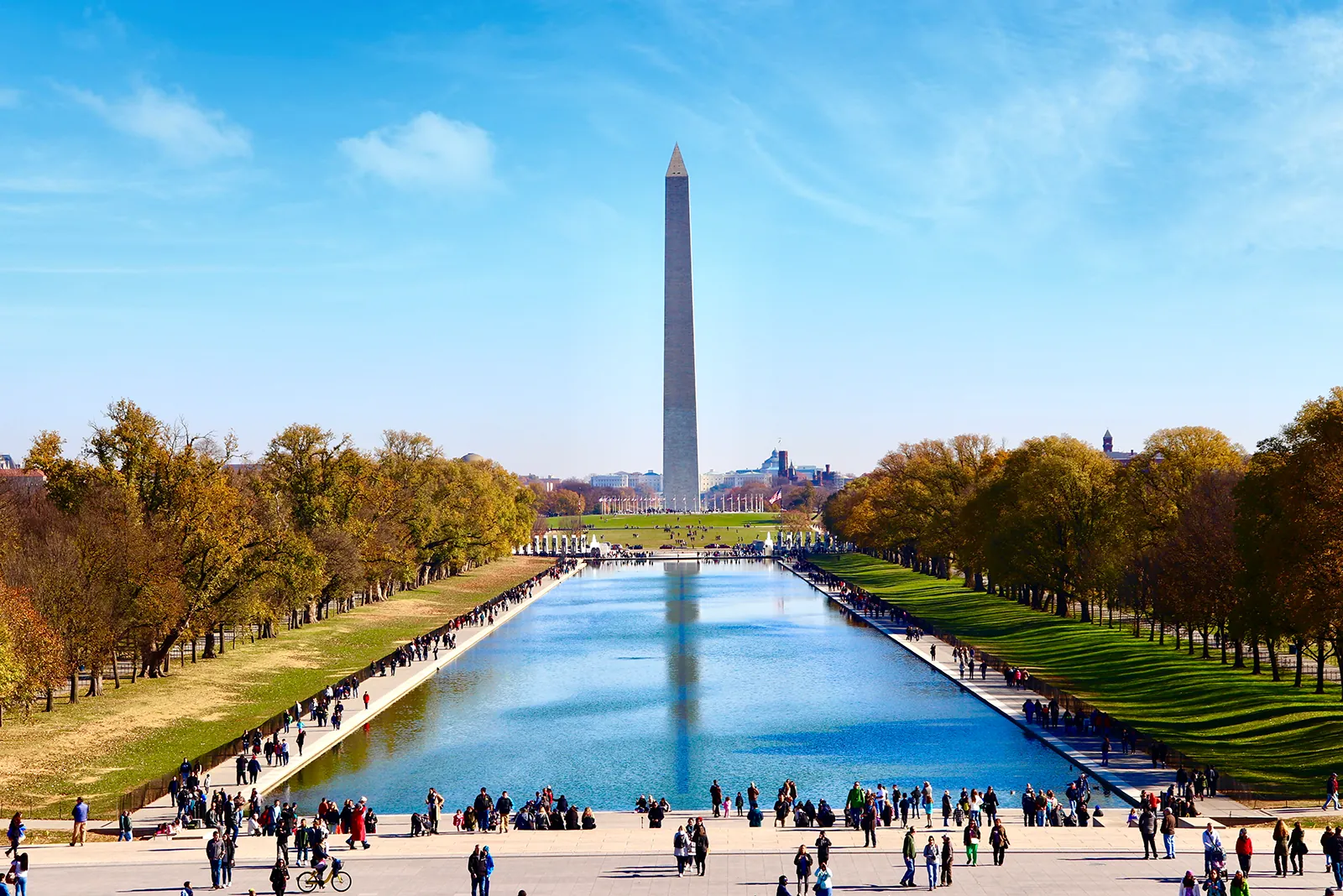
| 1:30 PM | Walk west past the Washington Monument to the World War II Memorial |
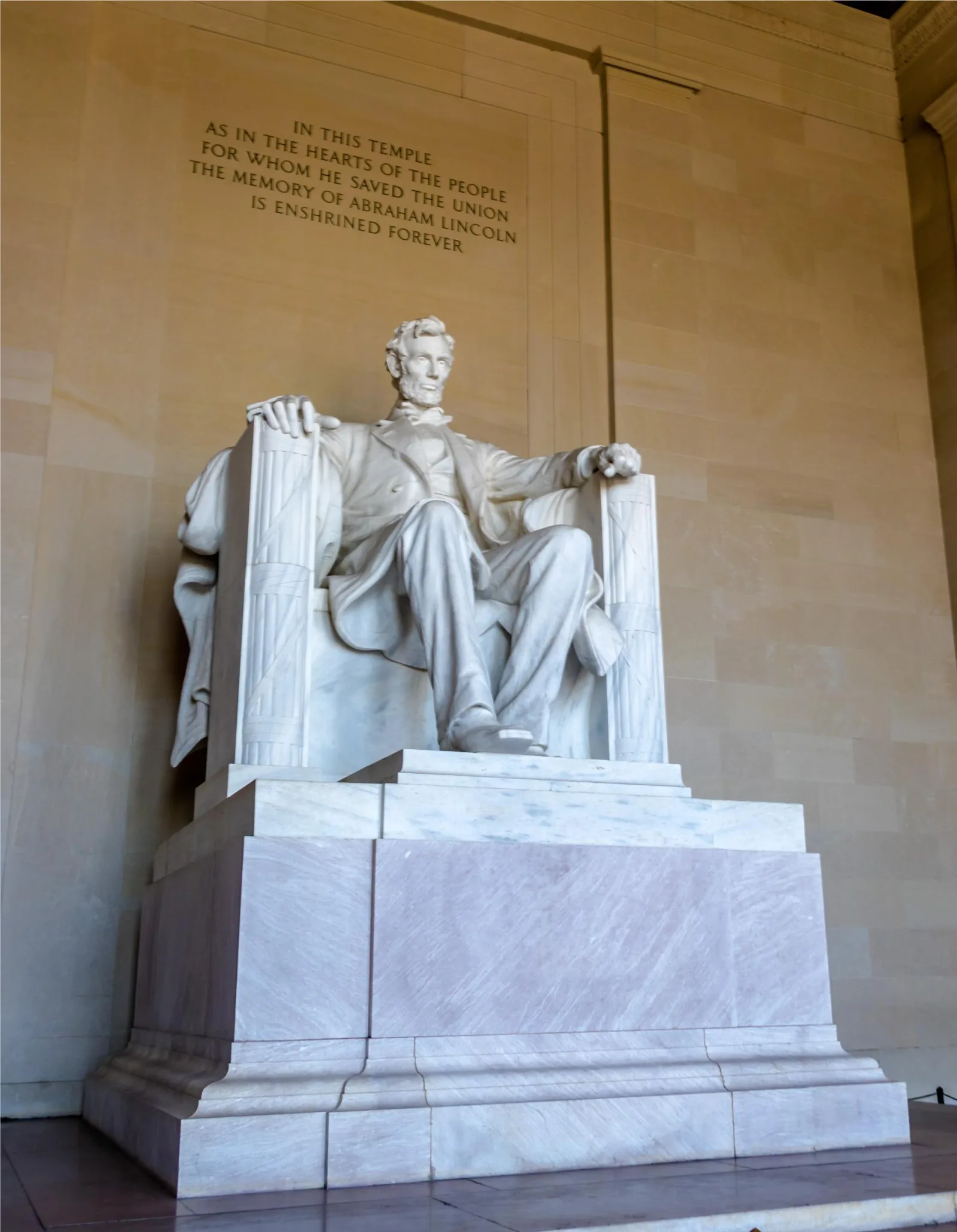
| 2:30 PM | The Lincoln Memorial, the Reflecting Pool, and the Vietnam and Korean War memorials |
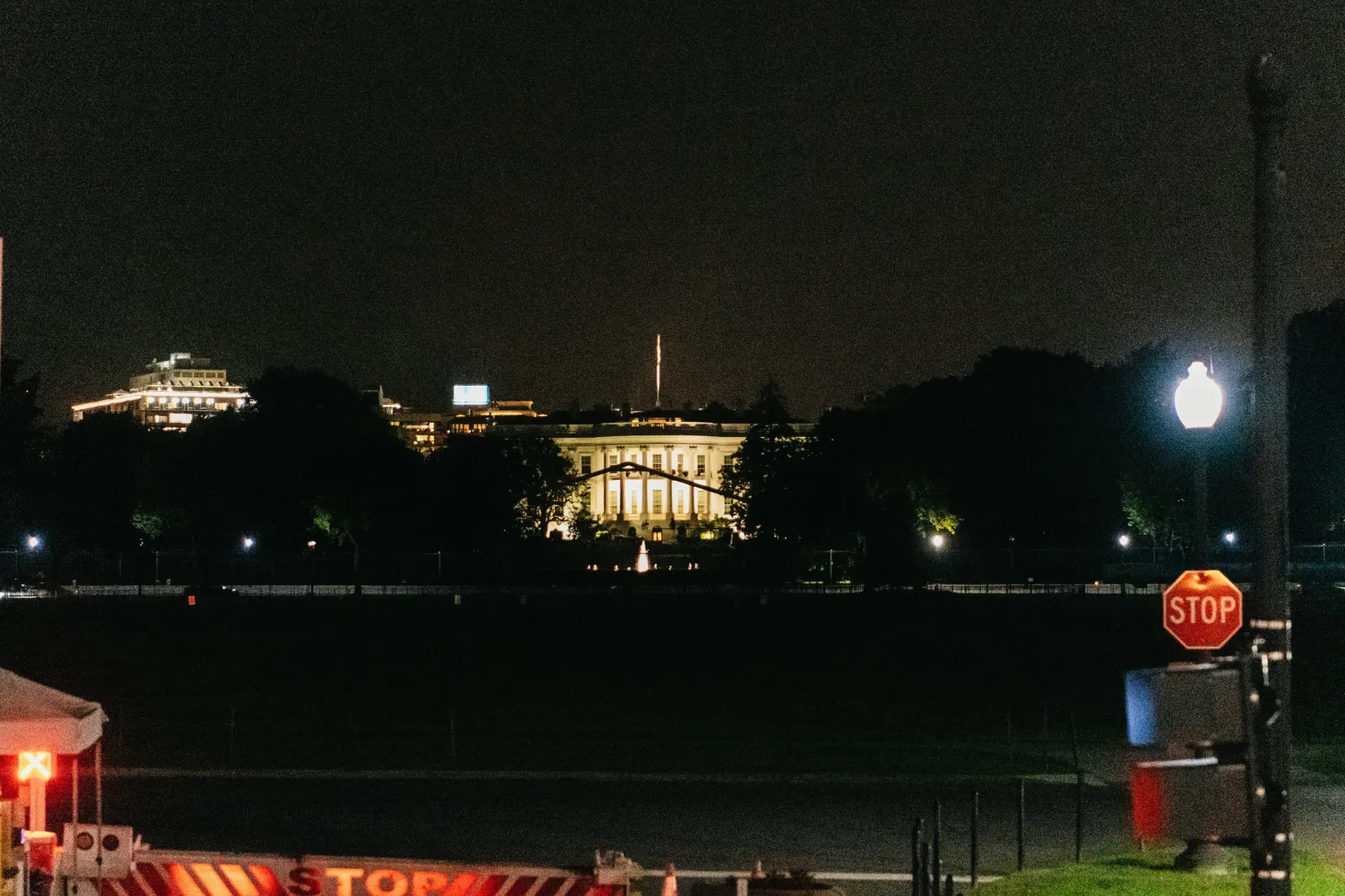
| 3:45 PM | The White House from outside, via the Ellipse or Lafayette Square |
| 4:30 PM | Metro back to Union Station, with time for a coffee before your train |
Two things need booking well ahead. The Washington Monument uses timed tickets released 30 days in advance on recreation.gov, and a free tour inside the Capitol is booked at visitthecapitol.gov. White House tours are requested through a Member of Congress, 7 to 90 days ahead according to the White House (some congressional offices ask for at least 21 days), so they rarely fit a short trip.
Walking, and getting back to Union Station
Expect several miles. Even arriving by train, Washington is a walking-heavy city for visitors: the Capitol to the Lincoln Memorial alone is about two miles, before museum galleries, the White House detour, the walk from the station and the memorial paths. From the Lincoln Memorial back to Union Station, stop trying to prove you can walk everywhere: a taxi or rideshare is often the simplest choice late in the day, and the Metro plus a walk, or a bus, also work.
Amtrak advises arriving at least 30 minutes before departure if you need no baggage or ticketing help. At Union Station the boarding gate is posted about 15 minutes before departure and closes 3 minutes before, which is not permission to arrive at the last minute. Aim to be back 30 to 40 minutes before your train, especially if you do not know the station, traffic is heavy, there are road closures, you want food or you are exhausted. If you get back early, Union Station is not a bad place to wait: you can eat, use the restroom, charge your phone, sit down and buy something for the train.
On board
Comfort: generally good. The biggest advantage over a bus is being able to move: you can stand, walk, use the restroom, work, eat and look out of the window, which matters over three hours or more.
Working: Amtrak offers Wi-Fi on many Northeast Corridor trains, and there is power on board, but do not rely on the Wi-Fi for an important live call. Use the time for email, reading, downloading tickets, planning or sleep.
Scenery: functional more than spectacular. You pass through New Jersey, Philadelphia, Delaware, the Baltimore area and Maryland, with some interesting urban and industrial views; the value is speed and convenience.
Food: the café service varies by train, and you can bring your own. Carry breakfast, a snack and water, which saves time in Washington.
Luggage: do not bring any if you are going back to New York that evening. A suitcase slows you down, complicates security, makes museums awkward and tires you out. Leave it at your hotel and carry a day bag.
ID: carry government-issued photo ID. Arlington and other secure federal sites have their own rules, and overseas visitors should keep their passport with them for those.
Accessibility: Moynihan Train Hall and Union Station both have accessibility facilities, and Amtrak lists elevators and passenger assistance at its stations; if you need help, arrive earlier. That makes the train more predictable than a coach tour, where vehicle accessibility varies.
Train against the other options
- Against a guided tour: the train is better for museums, the inside of the Capitol, photography, independence, food and setting your own pace. The tour is better for Arlington, seeing the most landmarks, no planning at all, and first-time visitors who dislike navigating.
- Against an intercity bus: the train is better for reliable timing, comfort and making the most of a day; the bus is better on price. For a same-day trip, a reasonable premium for the train is worth paying; for an overnight trip, the bus becomes more attractive.
- Against driving: for most travellers based in Manhattan, the train wins. Driving adds tolls, traffic, parking and fatigue, so unless you already have a car and a wider road trip, the train is easier.
If something goes wrong
If your train down is late, have a simpler fallback plan. Thirty minutes late changes nothing much; an hour late, shorten the museum; 90 minutes late, drop one timed visit; very late, concentrate on the Capitol from outside, the Mall, the White House and the Lincoln Memorial. A good day does not depend on ticking off every planned stop.
If your evening train is cancelled, check the Amtrak app and the station information. That is the practical reason not to book the very last train of the night: choose an evening departure with at least one later option after it. The last train maximises your sightseeing, but it gets you back to New York very late, leaves no alternative if something goes wrong and makes the next day harder. The best return balances time in Washington with the rest of your trip.
Which day, and which season?
Sunday can be excellent for the monuments, but the Capitol Visitor Center is closed, so a Sunday train day works best for the Capitol from outside, the Smithsonian, the White House and the memorials. Weekdays or weekends: there is no universal answer. Weekdays can have strong schedules but heavier business demand, and weekends run different patterns, so compare your actual date.
- Spring: beautiful, busy and expensive around the peak dates.
- Summer: long days, but hot walking.
- Autumn: probably the easiest balance.
- Winter: fewer crowds, colder time outdoors and more risk from the weather. The train is especially good in bad weather, because you can switch to museums.
With children or older travellers
Children: the train is arguably easier than a coach for younger children: they can move around, the toilets are easy to reach, and you control the return and can change the plan. Still, do not overpack the day.
Older travellers: the train cuts the road fatigue, but the walking in Washington is still significant. Use rideshares, buses or the Metro to cut the longest stretches.
A no-stress day and an ambitious one
No stress: the Capitol from outside, one Smithsonian museum, lunch, the Washington Monument from outside, the White House, the Lincoln Memorial, then home. Skip Arlington, the top of the Washington Monument, a second museum and Georgetown. It is still a very good day in Washington.
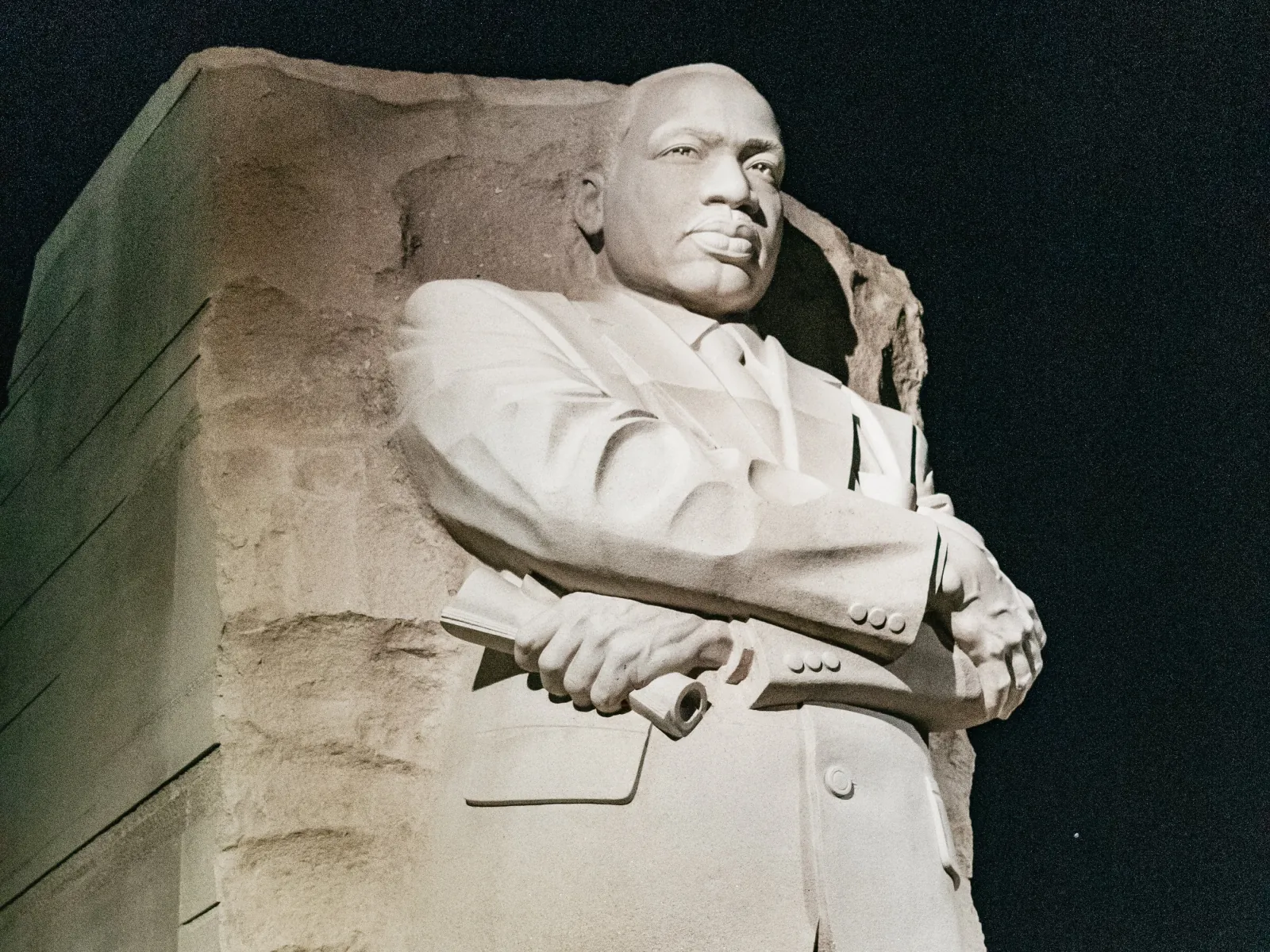
Ambitious, if you arrive very early and return late: a tour inside the Capitol, a Smithsonian museum, the Washington Monument from outside, the White House, the World War II, Vietnam and Korean War memorials, the Lincoln Memorial, and the Martin Luther King Jr. Memorial if you have the time and energy. Even then, leave Arlington out unless it is a priority.
The mistakes people make
- Booking the cheapest departure. The schedule may be terrible for sightseeing.
- Choosing Acela automatically. The time saved may be small.
- Coming back too early. Six hours of travel for four hours of sightseeing.
- Coming back too late. A fun day turns into a 20-hour mission.
- Booking three timed attractions. You lose all flexibility.
- Adding Arlington on top of everything. Something else has to go.
- Walking all the way back to Union Station. Your feet will not thank you.
If you are comfortable finding your way round a city on your own, the train is probably the best way to do Washington as a day trip from New York: the most control, a central arrival, a comfortable ride, a realistic museum visit and the chance to book the Capitol or another timed visit. Default to the Northeast Regional, and upgrade to Acela only when the schedule gives you noticeably more time in Washington.
Tours that fit a train day
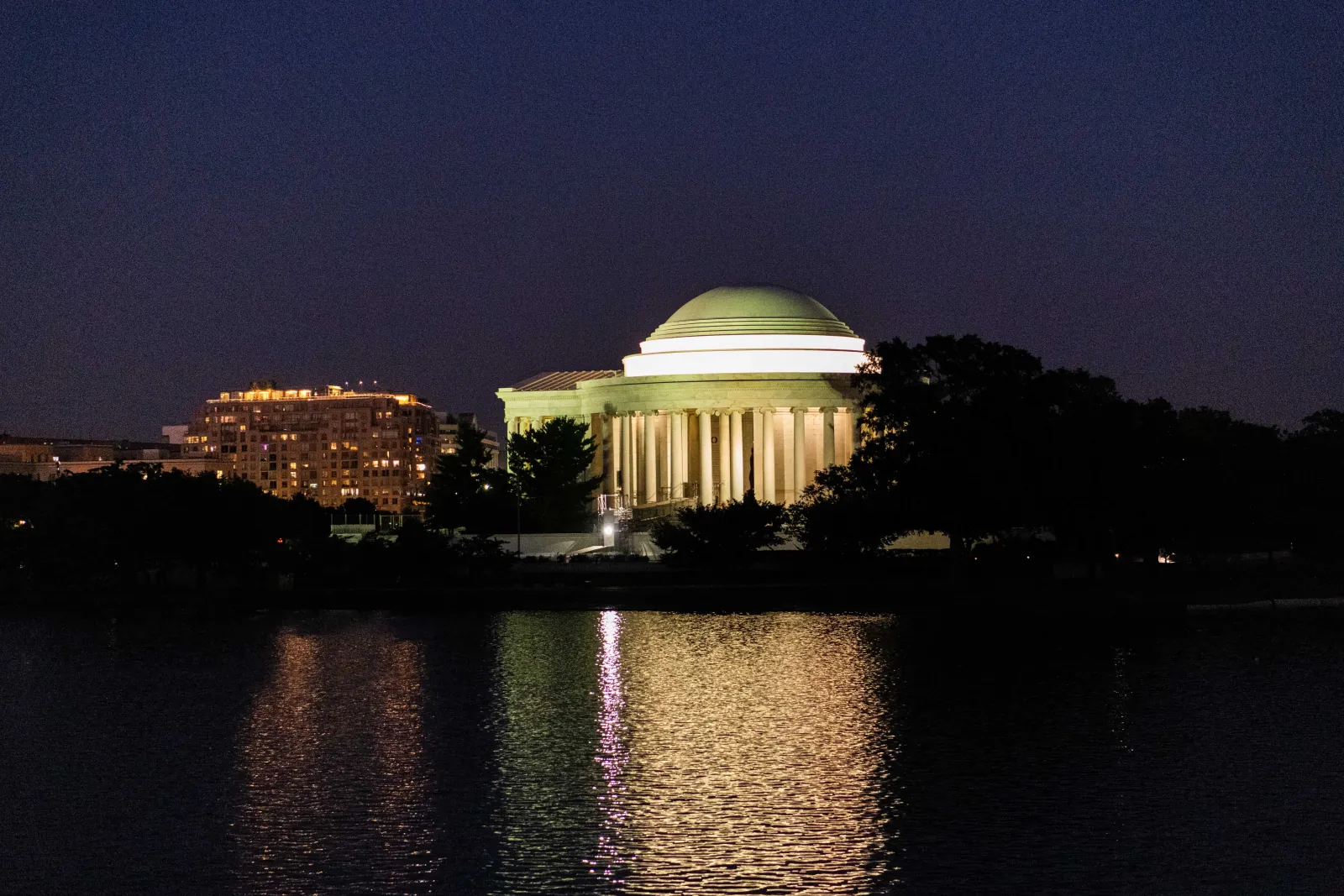
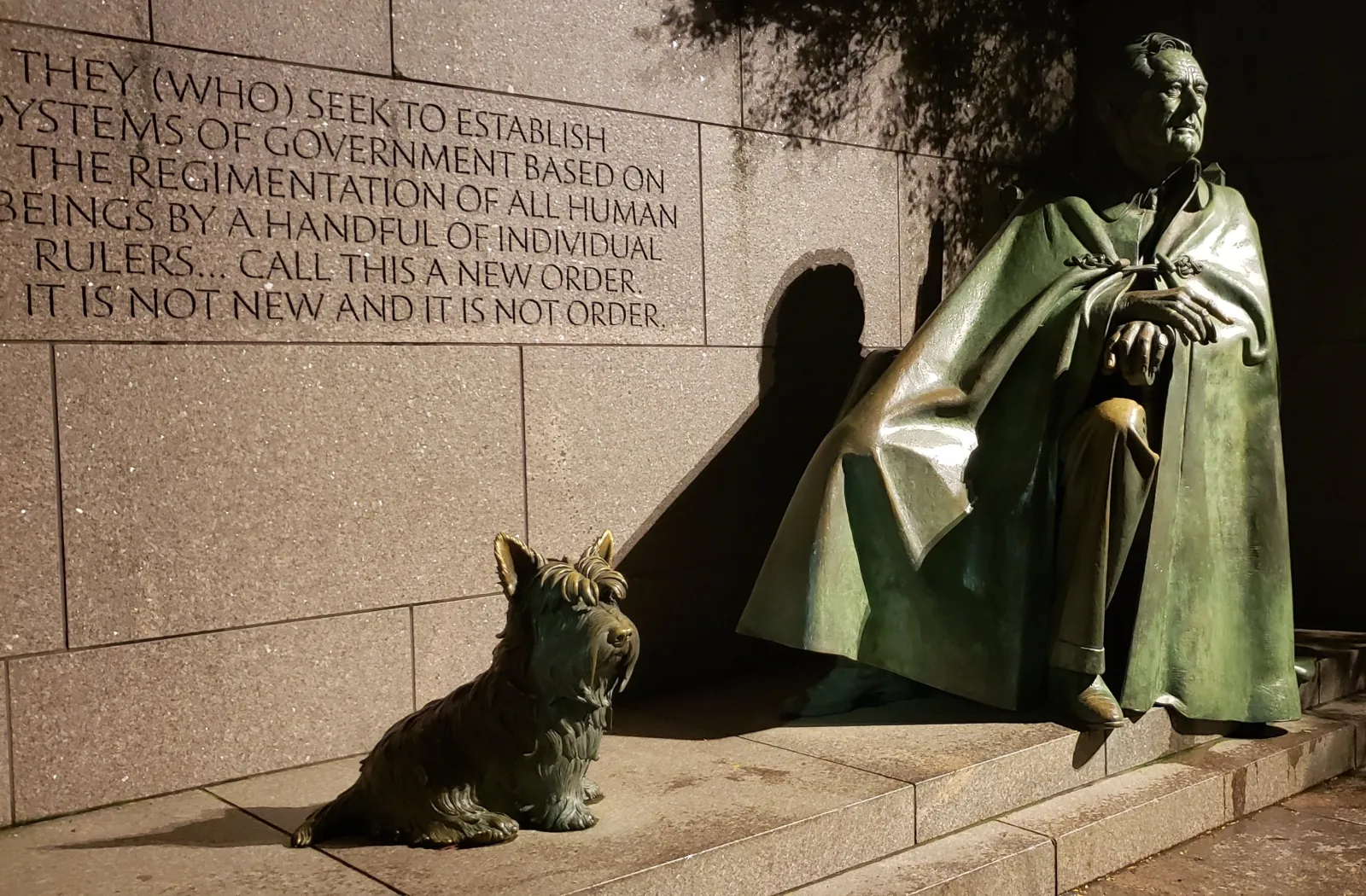
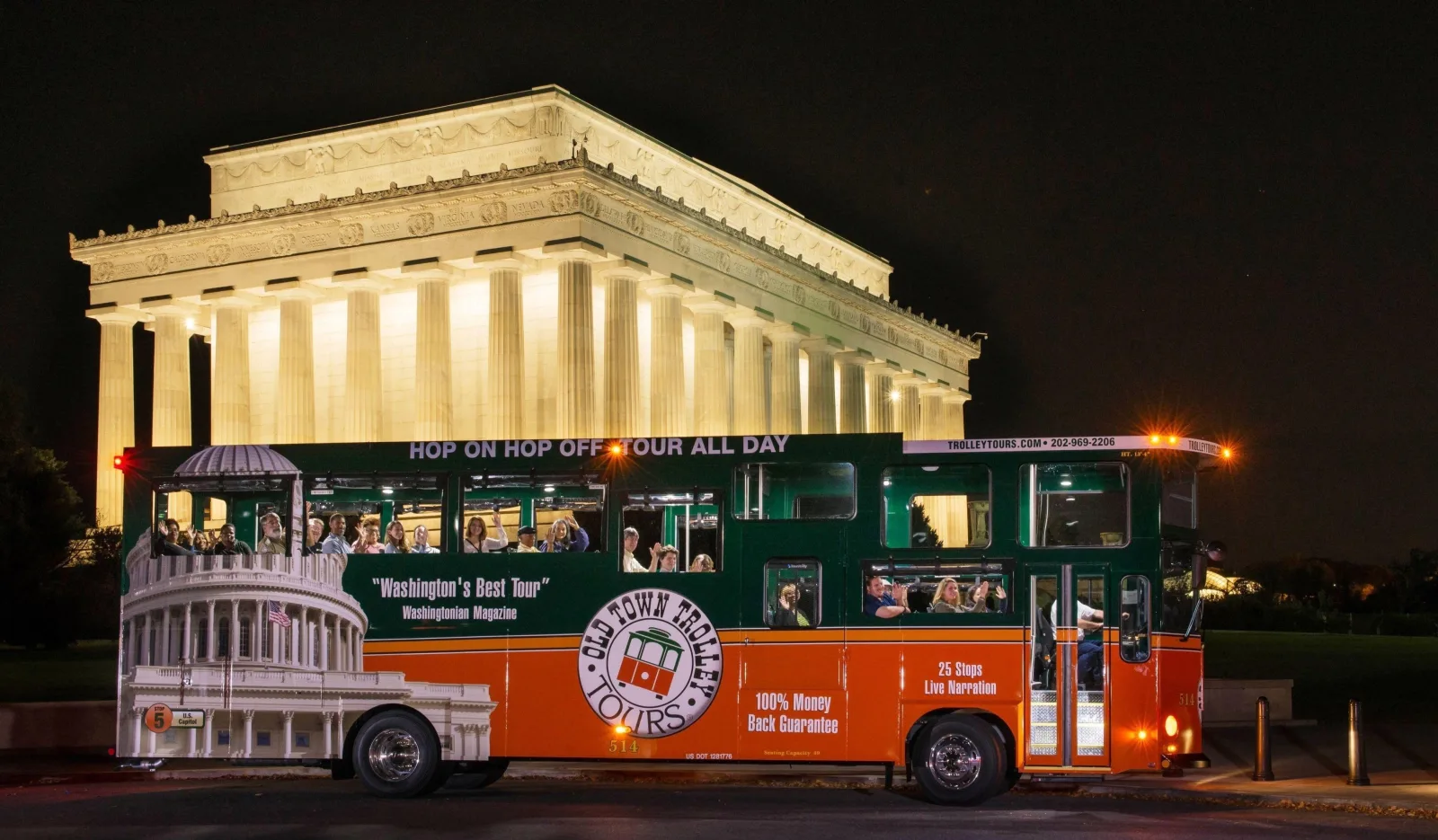
The Monuments by Moonlight trolley tour is the easiest guided tour to add, because one option leaves from Union Station. It runs after dark for about two and a half hours, with two stops of about 30 minutes: the Lincoln, Vietnam and Korean War Veterans memorials, then the FDR and Martin Luther King Jr. memorials. It costs $60 per person and is rated 4.6 from more than 1,600 reviews. Read our breakdown of the night trolley for the full route.
As a night tour it suits an overnight stay best. In winter, when the sun sets before 5 PM, a day-tripper can fit it in before a late train; in June, with about 15 hours of daylight, it is really one for a night in a hotel. Leave bags at your hotel, because luggage is not allowed on board.
For daytime, a few Washington-based tours fit around the trains:
- The monuments and memorials bike tour covers about 4 miles of flat ground in three hours, from 701 D Street NW. It is $65 per person and rated 4.7 from 437 reviews.
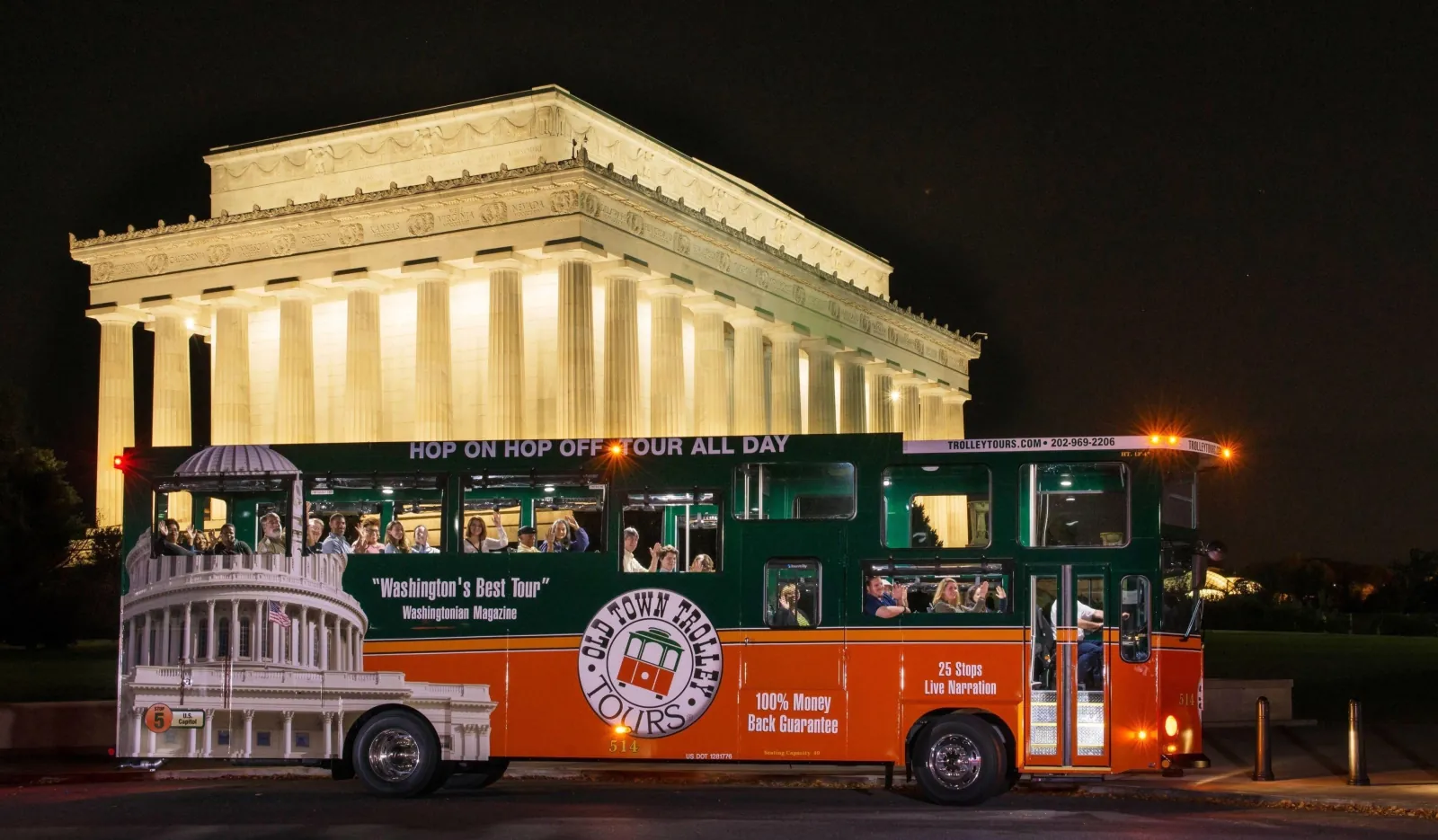
- The hop-on hop-off Old Town Trolley starts at Union Station and has 25 stops, from $55 per person, rated 4.2 from 737 reviews.
- The Arlington National Cemetery tram tour is a 45-minute loop to the Kennedy graves and the Tomb of the Unknown Soldier, for $22 per person, rated 4.6 from 606. Bring a passport if you are visiting from abroad.
- The private DC tour with a driver-guide is four hours for your group, from $520 per group of up to five, rated 4.7 from 44 reviews. Pickup is from your Washington accommodation, so it pairs best with an overnight.
Train or guided tour?
Take the train if you want more hours in Washington, museum time, or the freedom to linger, and you are happy to plan. It is also the better choice if you are staying overnight or want to see the memorials lit up at night.
A guided coach tour is simpler for first-timers, visitors from abroad and anyone booking late, when train fares are high. Washington-only day trips on this site cost $107 to $129 per person with the transport and a guide included, and they reach Arlington National Cemetery, which is awkward to fit into a train day on foot. Our train vs bus vs tour comparison sets the two side by side, and the day-trip comparison covers every tour from Midtown. If one day feels too tight, the 2-day Washington trip gives you a second morning. Travelling as a family or group? Private Washington tours from NYC compares a private car from your door with the train and a private guide in DC.
If you are travelling by train and want the memorials at night, check dates for the Monuments by Moonlight tour.